How Advisory Technology is Reshaping the Financial Landscape
The financial services industry stands at a pivotal crossroads where artificial intelligence meets human expertise. As technology continues to advance at an unprecedented pace, the distinction between automated trading systems and advisory services has become increasingly important for investors, financial professionals, and regulatory bodies alike. This comprehensive analysis explores how advisory technology is fundamentally transforming the way financial decisions are made, while emphasizing the critical role of human judgment in the implementation process.
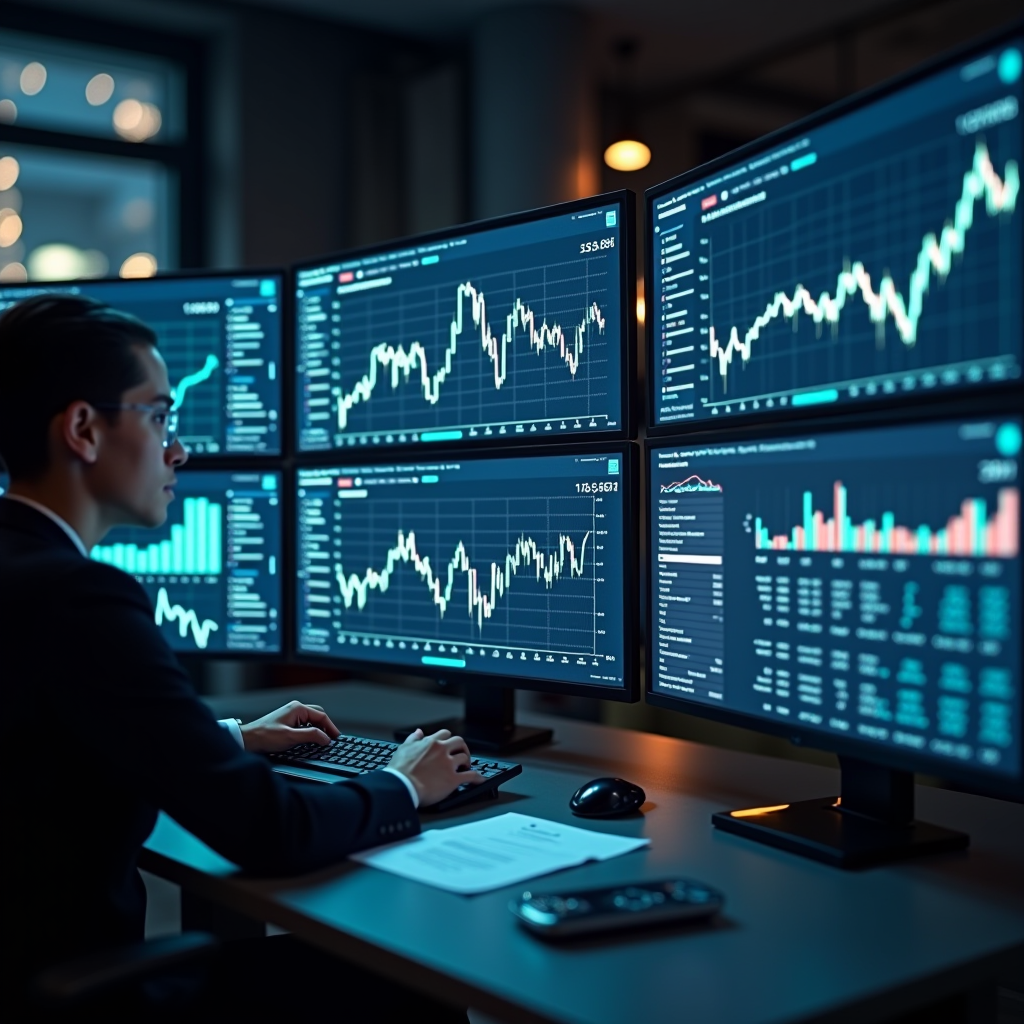
The Evolution of Financial Advisory Technology
The financial technology sector has witnessed remarkable transformation over the past decade, with artificial intelligence and machine learning algorithms becoming increasingly sophisticated in their ability to analyze market data and identify potential opportunities. However, a fundamental distinction exists between systems that execute trades automatically and those that provide advisory recommendations requiring human oversight and decision-making.
Advisory technology platforms leverage advanced technical analysis tools to process vast amounts of market data, identifying patterns, trends, and potential entry or exit points. These systems employ complex algorithms that can analyze multiple timeframes, technical indicators, and market conditions simultaneously—a task that would be virtually impossible for human analysts to perform with the same speed and consistency. The key differentiator lies in what happens after the analysis is complete: rather than executing trades automatically, advisory systems present their findings as recommendations that require human review and approval.
This approach acknowledges a crucial reality of financial markets: while technology excels at data processing and pattern recognition, human judgment remains essential for contextual understanding, risk assessment, and strategic decision-making. Market conditions are influenced by countless factors—geopolitical events, regulatory changes, economic indicators, and sentiment shifts—that require nuanced interpretation beyond pure technical analysis.
The evolution of advisory technology represents a maturation of the fintech industry, moving away from the promise of fully automated trading solutions toward more sophisticated hybrid models that combine computational power with human expertise. This shift reflects growing recognition among financial professionals that the most effective approach to modern trading involves leveraging technology as a powerful analytical tool while maintaining human oversight of actual trading decisions.
Understanding the Distinction: Advisory vs. Automated Trading
The distinction between advisory services and automated trading systems is not merely semantic—it represents fundamentally different approaches to financial decision-making with significant implications for risk management, regulatory compliance, and investment outcomes. Understanding this difference is crucial for anyone considering the use of AI-powered financial technology.
Automated trading systems, often referred to as algorithmic trading or trading bots, are designed to execute trades without human intervention. Once configured and activated, these systems monitor market conditions and automatically place buy or sell orders based on predefined criteria. While this approach offers speed and the ability to capitalize on fleeting market opportunities, it also carries inherent risks. Automated systems can malfunction, misinterpret market conditions, or execute trades during periods of extreme volatility when human judgment might counsel caution.
In contrast, advisory technology platforms function as sophisticated analytical assistants rather than autonomous traders. These systems continuously analyze market data using technical analysis methodologies, identifying potential trading opportunities based on chart patterns, indicator signals, support and resistance levels, and other technical factors. However, instead of executing trades, they present their findings as recommendations to human users who retain full control over whether, when, and how to act on the information provided.
This advisory model offers several distinct advantages. First, it allows traders to benefit from the analytical capabilities of artificial intelligence while maintaining ultimate decision-making authority. Users can evaluate recommendations in the context of their broader investment strategy, risk tolerance, and current market understanding. Second, it provides an educational component—by reviewing the technical analysis behind each recommendation, users can develop their own analytical skills and market understanding over time. Third, it offers flexibility to override or modify recommendations based on factors the AI system may not fully account for, such as breaking news, personal financial circumstances, or portfolio diversification needs.
The Critical Role of Human Decision-Making
Despite remarkable advances in artificial intelligence and machine learning, human judgment remains an irreplaceable component of successful trading and investment management. The financial markets are complex adaptive systems influenced by human psychology, institutional behavior, regulatory frameworks, and countless unpredictable events. While AI systems excel at processing historical data and identifying patterns, they cannot fully replicate the contextual understanding, intuition, and adaptive reasoning that experienced human traders bring to decision-making.
Human oversight serves multiple critical functions in the advisory technology model. First, it provides a reality check on AI-generated recommendations. Technical analysis, while valuable, is not infallible—patterns can fail, indicators can generate false signals, and market conditions can change rapidly. Human traders can assess whether a recommendation makes sense given current market context, recent news developments, or broader economic trends that may not be fully reflected in technical indicators.
Second, human decision-making enables proper risk management. While advisory systems can suggest position sizes and stop-loss levels based on technical factors, only human users can truly assess whether a particular trade aligns with their overall risk tolerance, portfolio composition, and financial goals. A recommendation that appears technically sound may be inappropriate for a particular investor's circumstances, time horizon, or risk capacity.
Third, human judgment allows for strategic flexibility and adaptation. Markets evolve, and strategies that work in one environment may prove ineffective in another. Human traders can recognize when market conditions have fundamentally changed and adjust their approach accordingly, rather than rigidly following algorithmic recommendations that may be based on historical patterns no longer relevant to current conditions.
Furthermore, human oversight provides an essential ethical and regulatory safeguard. Financial markets operate within complex regulatory frameworks designed to ensure fairness, transparency, and investor protection. Human decision-makers can ensure that trading activities comply with applicable regulations, avoid conflicts of interest, and adhere to ethical standards—considerations that purely automated systems may not adequately address.
Technical Analysis in the Age of Artificial Intelligence
Technical analysis has long been a cornerstone of trading methodology, involving the study of historical price movements, volume patterns, and various indicators to forecast future market behavior. The integration of artificial intelligence into technical analysis represents a significant advancement in the field, enabling more comprehensive, consistent, and rapid analysis than traditional manual methods.
Modern AI-powered advisory systems can simultaneously monitor dozens or even hundreds of technical indicators across multiple timeframes and asset classes. They can identify complex chart patterns that might escape human notice, detect subtle correlations between different markets, and process real-time data streams with minimal latency. This computational capability allows for a level of analytical thoroughness that would be impractical for human analysts working manually.
However, the application of AI to technical analysis also raises important considerations. Technical analysis is based on the premise that historical price patterns tend to repeat because human psychology and market dynamics remain relatively consistent over time. AI systems trained on historical data may excel at recognizing these patterns, but they can also be vulnerable to overfitting—becoming too specialized in identifying patterns from past data that may not reliably predict future outcomes.
This is where the advisory model proves particularly valuable. By presenting technical analysis findings as recommendations rather than executing trades automatically, advisory systems allow human users to evaluate whether identified patterns and signals make sense in the current market context. Users can consider whether market structure has changed, whether unusual factors are at play, or whether the technical setup aligns with their understanding of fundamental market drivers.
Regulatory Considerations and Compliance
The regulatory landscape surrounding financial technology continues to evolve as authorities worldwide grapple with the implications of AI-powered trading and advisory systems. The distinction between advisory services and automated trading carries significant regulatory implications, particularly in jurisdictions with stringent financial services regulations such as the United Kingdom and European Union.
Advisory technology platforms that provide recommendations without executing trades typically face different regulatory requirements than fully automated trading systems. By maintaining human decision-making in the loop, advisory services can often operate under frameworks designed for investment research and analysis rather than those governing automated execution systems. This distinction is important for both service providers and users to understand.
Regulatory bodies have expressed concerns about fully automated trading systems, particularly regarding their potential to amplify market volatility, create systemic risks, and operate in ways that may be difficult to monitor or control. Advisory systems that require human approval for trades address many of these concerns by ensuring that a responsible party reviews and authorizes each trading decision.
Furthermore, the advisory model aligns well with regulatory principles emphasizing investor protection and suitability. When humans make final trading decisions based on AI recommendations, they can ensure that trades are appropriate for their circumstances, risk profile, and investment objectives—considerations that regulators view as essential to responsible financial services provision.
The Future of Financial Advisory Technology
As we look toward the future of financial services, the trajectory appears clear: technology will continue to play an increasingly important role in market analysis and decision support, but the most successful approaches will be those that thoughtfully integrate artificial intelligence with human expertise rather than attempting to replace human judgment entirely.
The next generation of advisory technology will likely feature even more sophisticated analytical capabilities, incorporating natural language processing to analyze news and social media sentiment, machine learning models that adapt to changing market conditions, and advanced visualization tools that help users better understand complex market dynamics. However, these technological advances will be most valuable when deployed in service of human decision-making rather than as replacements for it.
The financial industry is increasingly recognizing that the optimal approach combines the strengths of both artificial intelligence and human intelligence. AI excels at processing vast amounts of data, identifying patterns, and maintaining consistent analytical discipline. Humans excel at contextual understanding, strategic thinking, risk assessment, and adaptive decision-making. Advisory technology platforms that effectively bridge these complementary capabilities represent the future of financial services.
For investors and traders, this evolution offers exciting opportunities. Access to sophisticated analytical tools that were once available only to institutional investors is becoming increasingly democratized. Individual traders can now leverage AI-powered technical analysis to inform their decisions while maintaining full control over their trading activities. This democratization of financial technology has the potential to level the playing field and enable more informed decision-making across the investment community.
Conclusion: A Balanced Approach to Financial Technology
The reshaping of the financial landscape through advisory technology represents a maturation of the fintech industry's understanding of how artificial intelligence can most effectively serve investors and traders. Rather than pursuing the elusive goal of fully automated trading systems that operate without human oversight, the industry is increasingly embracing hybrid models that leverage AI's analytical capabilities while preserving human judgment and decision-making authority.
The distinction between advisory services and automated trading is not merely technical—it reflects fundamentally different philosophies about the role of technology in financial decision-making. Advisory platforms recognize that while AI can process data and identify patterns with superhuman speed and consistency, the complexity and unpredictability of financial markets require human oversight, contextual understanding, and strategic judgment.
As advisory technology continues to evolve and improve, it promises to make sophisticated analytical tools accessible to a broader range of market participants while maintaining the essential human element that ensures responsible, informed, and contextually appropriate trading decisions. This balanced approach—combining the computational power of artificial intelligence with the wisdom and judgment of human decision-makers—represents the most promising path forward for financial technology.
For those navigating the modern financial landscape, understanding this distinction is crucial. Advisory technology offers powerful tools for market analysis and decision support, but it is the human user who ultimately bears responsibility for trading decisions and their outcomes. This reality underscores the importance of financial education, risk management discipline, and thoughtful engagement with technology as a tool rather than a replacement for human judgment. The future of finance lies not in choosing between human expertise and artificial intelligence, but in finding ever more effective ways to combine their complementary strengths.
This article provides educational information about financial advisory technology and should not be construed as investment advice. All trading and investment decisions carry risk, and individuals should conduct their own research and consult with qualified financial professionals before making investment decisions.